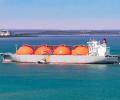
Urals and Sokol accounted for every 4 out of 5 barrels of Russian supplies to India last year.
The Kremlin states it has not received confirmation from India regarding a halt to Russian oil purchases, following claims made by former US President Donald Trump. Russia affirms its commitment to strengthening relations with India.

Indian refiners have access to only limited Iranian volumes compared with Russian oil, and even the barrels on offer come with 'too many hassles'.

It is plain to see that the US senate bill's real objective is to derail India's time-tested strategic partnership with Russia, points out Ambassador M K Bhadrakumar.

Indian refiners are recalibrating their crude sourcing strategy due to supply disruptions in West Asia, leading to Venezuela and Brazil emerging as top five suppliers in April, replacing traditional sources like Iraq and the United States.

The Kremlin has stated that India is free to purchase oil from any country, dismissing claims that India agreed to reduce Russian oil imports. Russia maintains that energy trade with India benefits both nations and contributes to international energy market stability.

The US has seized an oil tanker, 'Skywave', linked to Iran in the Indian Ocean, as part of efforts to disrupt Iran's oil shipments and enforce sanctions. The vessel was part of a network transporting sanctioned Iranian crude oil, with the seizure occurring amid heightened tensions between Washington and Tehran.

Russia dominated Saudi Arabia in oil supplies as the world's fastest-growing major economy for fossil fuels in October, relegating the Kingdom to third place. Iraq was India's top oil supplier, according to the data from Vortexa. Saudi Arabia's decline in India's oil market has coincided with Russia's rise, and ironically occurred amid growing diplomatic ties between Riyadh and New Delhi. Saudi Crown Prince Mohammed bin Salman Al Saud is visiting India this month to meet Prime Minister Narendra Modi.
India significantly increased its crude oil imports from Russia and the United Arab Emirates in June, securing supplies as the Strait of Hormuz began to reopen, with Russian barrels remaining attractive due to discounts and UAE supplies offsetting earlier uncertainties.

US Vice President JD Vance and Prime Minister Narendra Modi held a phone call to discuss expanding the India-US comprehensive global strategic partnership, focusing on trade, defence, energy security, emerging technologies, and critical minerals. The discussion comes amidst rising tensions in West Asia and recent regional realignments, with both leaders reaffirming their commitment to strengthening cooperation.

Indian OMCs have not been buying Iranian or Venezuelan crude which is actually sanctioned by US. OMCs have always complied with the price cap of $60 for Russian oil recommended by the US.
Taking advantage of a Russian offer to sell its crude oil cheap and bear the cost of insurance and transportation, India may import as much as 2 million tonnes (mt), or roughly 15 million barrels of crude, from the sanctioned nation in 2022, Business Standard has learnt. This comes after reports that Indian Oil Corporation (IOC) bought 3 million barrels of Russian Urals from trader Vitol for May delivery. This will be on cost, insurance and freight (CIF) model, where the seller incurs the costs and pays the freight, including insurance charges.

Indian refiners are negotiating for additional crude cargoes from the US, Russia, and West Africa to ensure adequate supplies amid Middle East tensions. Refineries are maintaining normal processing rates and deferring maintenance to build reserves. The move comes as conflict impacts tanker movements through the Strait of Hormuz, a key energy transit route.

A US-sanctioned tanker carrying Iranian crude oil has rerouted mid-voyage from its previously indicated destination of India to China, raising questions about payment issues and the future of India's Iranian oil imports.

US Treasury Secretary Scott Bessent indicated a potential pathway to remove tariffs imposed on India for purchasing Russian oil, citing a significant decrease in such purchases. He also criticized Europe's approach and accused India of profiting from discounted Russian oil.

Will rising tensions between US-Israel and Iran threaten crude oil supply through the Strait of Hormuz, putting India's fuel prices, imports, and economic stability at risk?
As stringent sanctions imposed by the European Union and US are crippling business and trade, desperate Russian oil companies are offering huge discounts to India, provided a payment mechanism to bypass the SWIFT ban is quickly approved by the government. According to sources familiar with the development, Russian oil firms are offering 25-27 per cent discount to the dated Brent crude prices. State-run Rosneft is one the biggest oil companies that supply crude to India.
There is no payment problem for Russian crude, Petroleum and Natural Gas Minister Hardeep Singh Puri said on Wednesday. He said there is no proposal to cut retail fuel prices at the moment. Addressing a press conference, the minister said India enjoys a buyers' position and foreign suppliers are approaching Indian companies with offers to sell oil.
India's crude oil imports from Russia saw a marginal decline in September, but continued to account for over one-third of the country's total oil purchases, despite US pressure to curb the trade over concerns that it supports Moscow's war effort in Ukraine. India's crude imports in September were around 4.7 million barrels per day, up 220,000 bpd month-on-month and flat year-on-year.

India possesses approximately 100 million barrels of commercial crude oil stocks, capable of covering 40-45 days of its requirements if flows through the Strait of Hormuz are disrupted, according to Kpler.
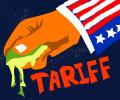
A trade deal makes sense only if it is fair and reciprocal. If the cost is strategic dependence or loss of policy space, waiting is the wiser option, asserts Ajay Srivastava.
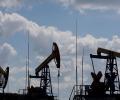
The government has no say in where the country's refiners source oil from because these are commercial transactions.

There are enough people at the top decision-making level in Tehran who are still willing to negotiate, provided Trump can create the right setting for the negotiation to acquire a dynamic of its own, points out Ambassador M K Bhadrakumar.

Domestic equities surged on Tuesday, posting their best single-day gains in more than eight months after a long-awaited trade deal between India and the US. The deal, which lowered tariffs on Indian goods to 18 per cent from 50 per cent, significantly improved investor sentiment and lifted a key overhang for the market.

'Trump is likely being purposefully vague, hoping that this lack of clarity will pressure India, fearing the worst, to agree to scale back its imports of Russian oil.'
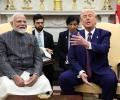
His assertion came after Trump claimed that his "friend" PM Modi has assured him that India would stop purchasing oil from Russia, a move he described as a big step toward increasing pressure on Moscow over its invasion of Ukraine.

Prime Minister Narendra Modi stayed calm, avoided public confrontation, and focused on India's long-term interests to steady ties with the United States.

Former White House trade advisor Peter Navarro accuses India of being an 'oil money laundromat' for Russia, alleging that India's oil purchases are funding Putin's war in Ukraine. The accusations come amid existing trade tensions and tariffs imposed by the US.
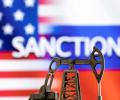
Russia has a "special mechanism" to confront any challenge arising out of the US slapping punitive measures against India for its procurement of Russian crude oil, Russian charge d'affaires Roman Babushkin said on Wednesday.
'The immediate impact for India will be very minimal as the share of Venezuela in our total overseas production is very low.'
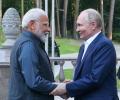
The Indian government is dealing with the matter having in mind the national interests of this country in the first place, he said.

'Everybody in America loses because of what India is doing.'

A resurgence in Saudi Arabian supplies of crude oil to India coupled with an attack on an Iraqi tanker in August carrying crude to Europe may result in improved bargaining power for India with West Asian and Russian suppliers for winter supplies. Shipments of Saudi oil rebounded in September from August, surging to the highest since March while Russian oil shipments rose marginally as Saudi Arabia tried to claw back market share in Asia, according to industry sources and ship tracking data.

India offset the decline in exports to traditional destinations by sharply ramping up shipments to Jordan (18,086 per cent), Hong Kong (17,006 per cent), Spain (13,436 per cent), the Philippines (2,235 per cent), and Namibia (1,068 per cent) in H1FY26.
India's exports to the US contracted 8.6 per cent to $6.3 billion in October, while imports rose 13.9 per cent to $4.5 billion leading to a trade surplus of $1.8 billion during the month.

United States Treasury Secretary Scott Bessent has warned that the secondary tariffs on India could go up if 'things don't go well' during talks between President Donald Trump and Russian President Vladimir Putin in Alaska on Friday.
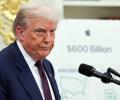
United States President Donald Trump has said India is 'very close' to China in terms of its purchases of Russian oil and will pay tariffs of 50 per cent as he indicated that 'you are going to see so much secondary sanctions'.

Russia's state-owned oil firm Rosneft has agreed to supply up to 500,000 barrels per day (bpd) of crude oil to Indian upstream oil and gas major Reliance Industries (RIL) in the largest-ever energy deal between the two countries, Reuters reported on Thursday. The 10-year agreement amounts to 0.5 per cent of global oil supply and is valued at roughly $13 billion per year at current prices, it said.
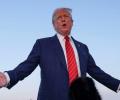
United States President Donald Trump on Tuesday said India has not been a good trading partner and announced that he will raise the tariffs on New Delhi 'very substantially' over the next 24 hours because it is buying Russian oil.
Miller said that US President Donald Trump has a 'tremendous' relationship with Prime Minister Narendra Modi, and that the peace options for the region are on the table.
